Pregel Pro
Pregel is an enterprise-grade observability and infrastructure application.
Industry
AI · B2B
status
Live closed system
Approaches
FSD, Design system
Tools
Figma
Year
2022-2026
About the project
Pregel Pro is the unified workspace for Platforma Pregel — an AI-native platform that helps enterprise infrastructure teams turn fragmented, people-dependent operations into a single source of truth, combining live digital twins of corporate infrastructure, AI agents that keep those models accurate as reality drifts, and a knowledge-graph foundation that makes infrastructure queryable across domains — from data centers and networks to services and security — in one operational workspace.
The brief: The two-way digital twin canvas
My core responsibilities span three fronts: co-owning and building from scratch the design system for an AI-native infrastructure product, with Claude embedded throughout my workflow; establishing the design language and interaction patterns for an entirely uncharted UI territory — a domain where the conventions for federated infrastructure, multi-domain navigation, and human–agent collaboration simply didn't exist yet; and designing from the ground up the centerpiece of the platform — the two-way digital twin canvas, where infrastructure isn't just visualized but actively shaped, with every change in the model propagating back to the physical world.
The path
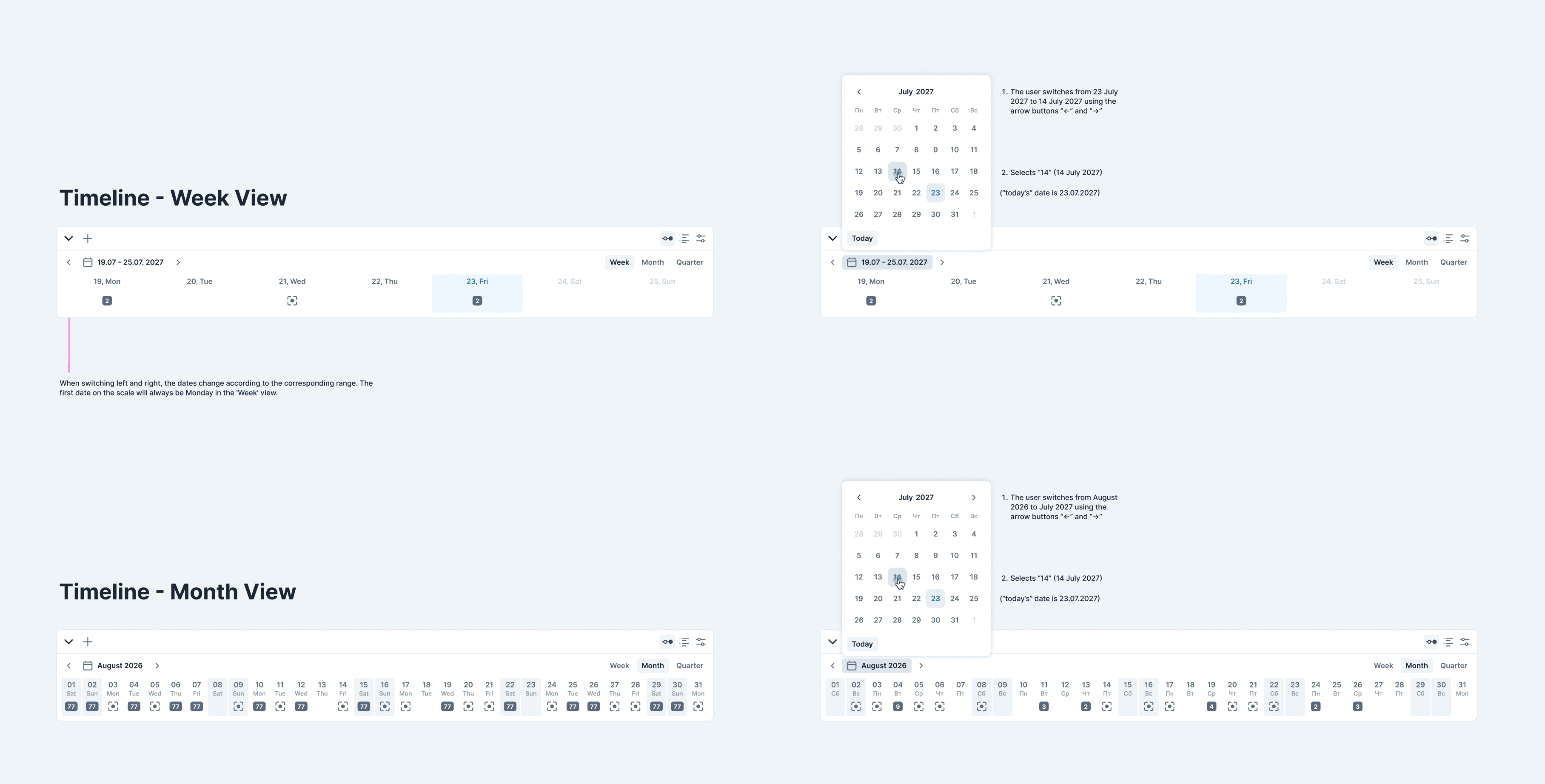
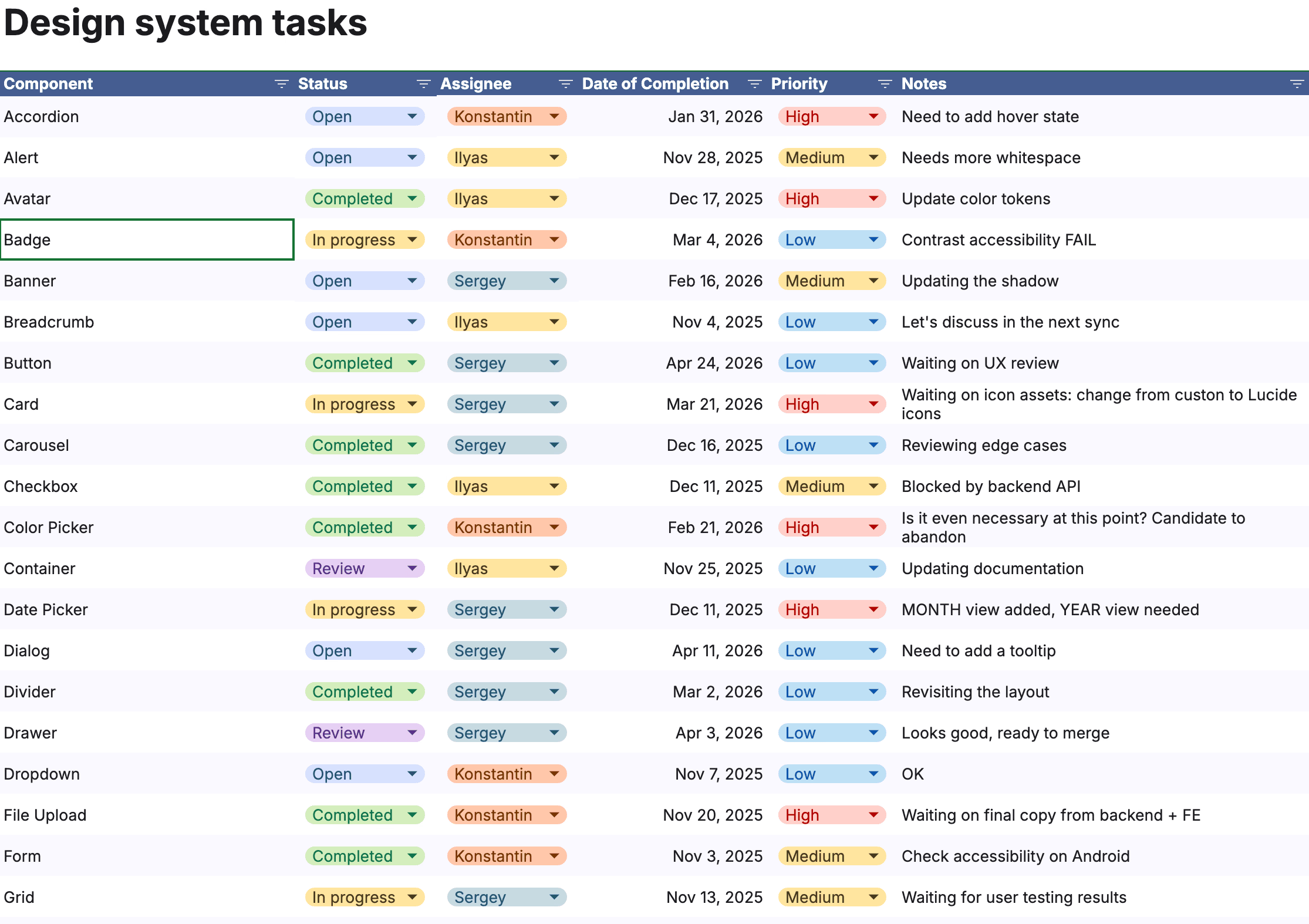
I took the lead on building our new design system alongside two other senior designers. I drove the extensive evaluation process to select our base framework, facilitating the discussions that helped us narrow our focus. Ultimately, I made the strategic call to adopt shadcn over RadixUI, recognizing shadcn's superior AI integration capabilities and broader range of ready-made components. From there, I mapped out our execution plan, dividing the customization work among the three of us, and oversaw the process of stress-testing the new framework against our existing concepts
Together with the multidisciplinary team of a product manager, a systems analyst and other designers we came up with the initial concept of an adaptive canvas, where all the tools are built around the canvas and adapt to context with available tooling.
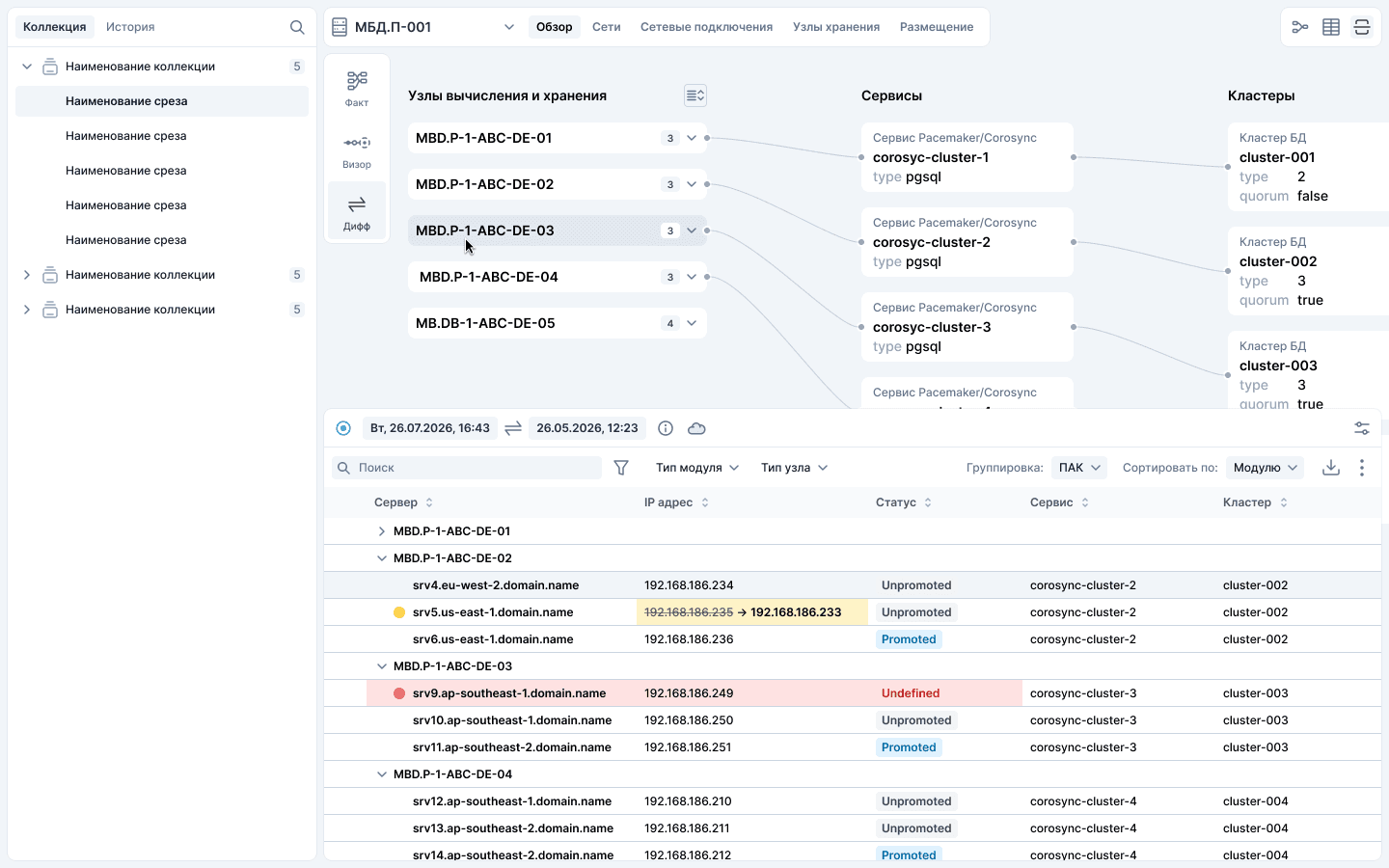
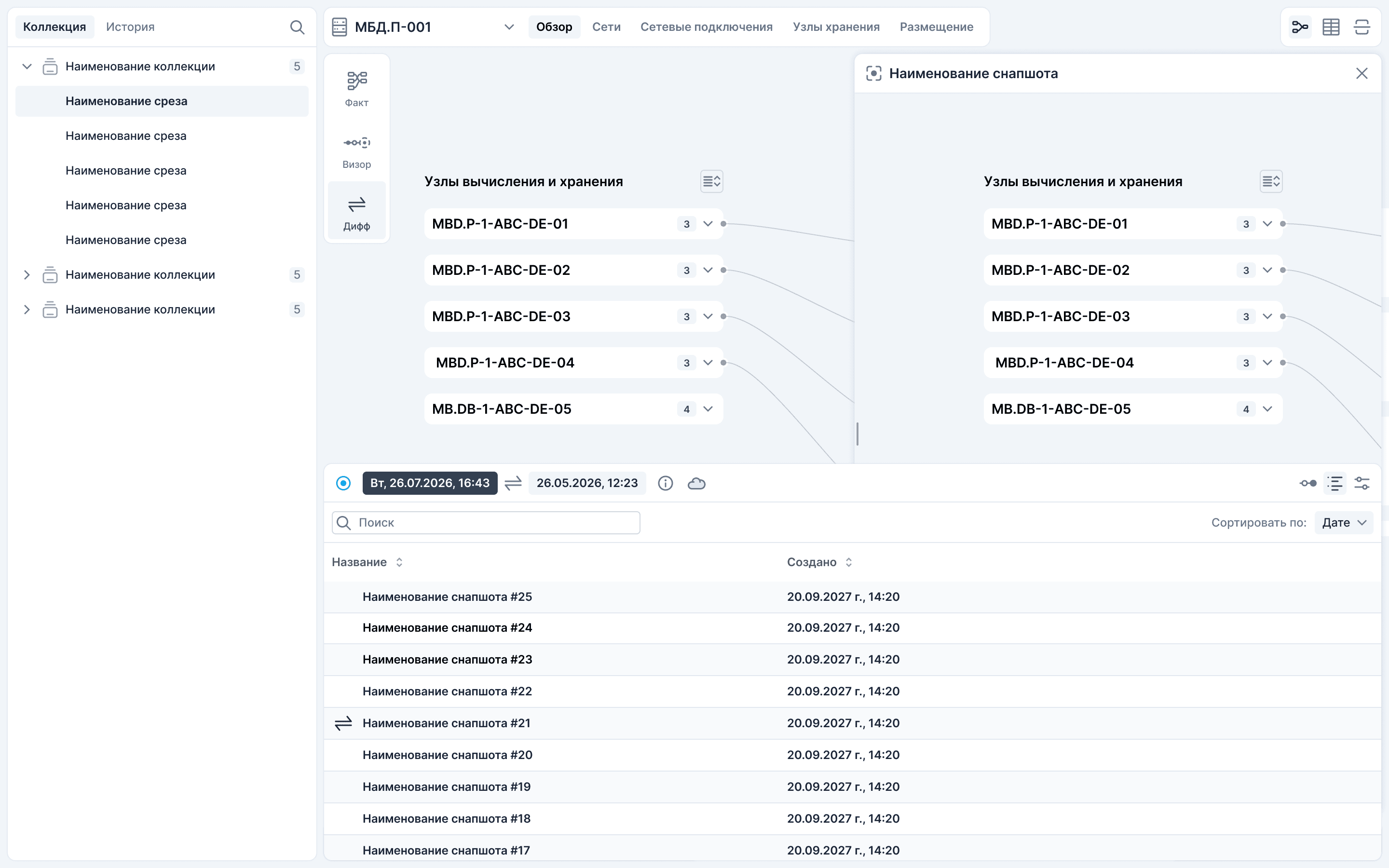
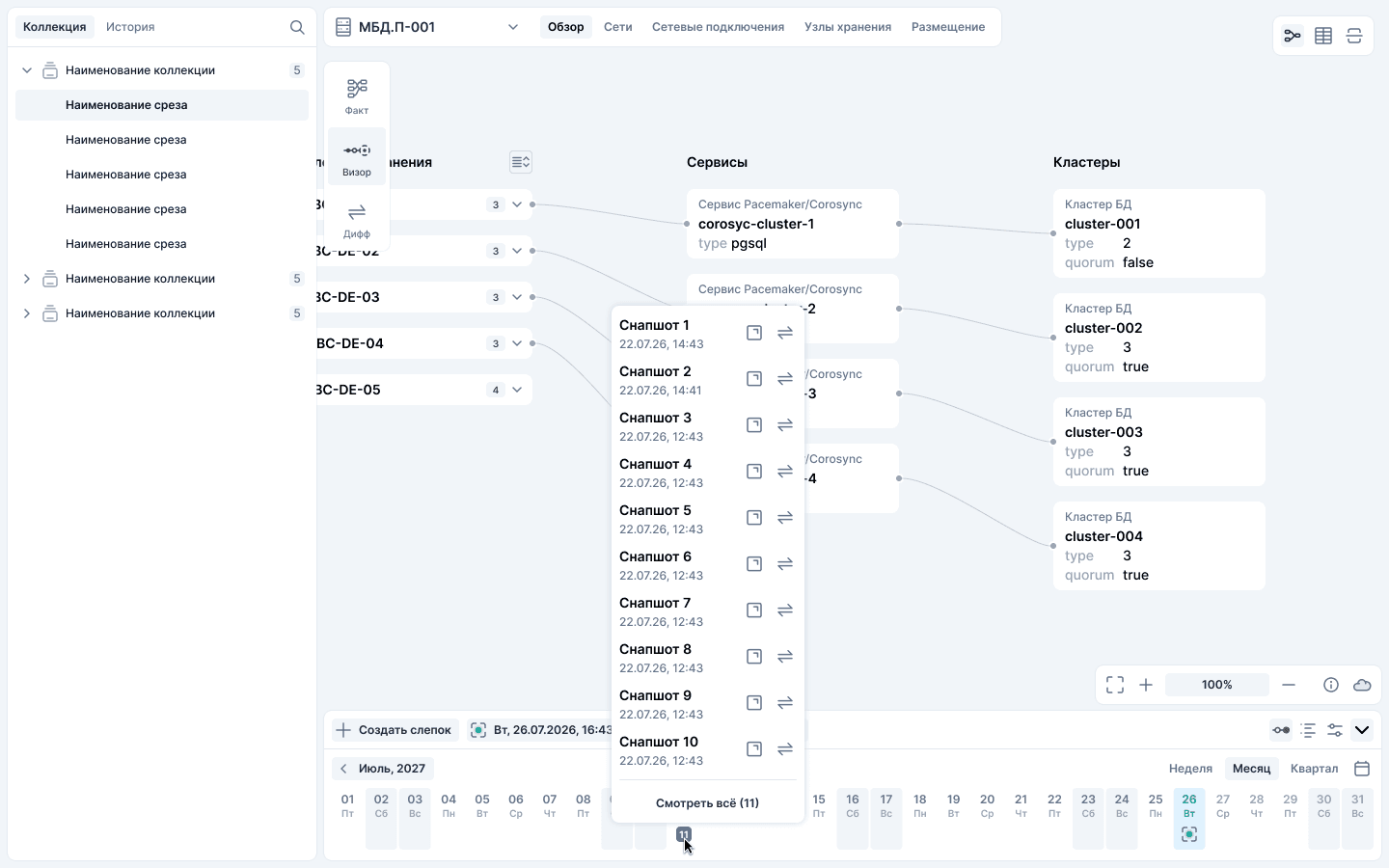
The Design Shift: From Grid Chaos to Menu Clarity
To improve incident management, we initially designed a data-rich layout featuring grids and tables. However, user testing revealed significant pushback; the interface was too complex, making it unclear what actions were required to resolve issues. In response, we completely revamped the design, replacing the dense grids with intuitive, action-driven menus.
I isolated the snapshot comparison menus into a clean management workflow and populated the canvas with our data using the backend API. Leveraging backend data allowed us to validate the precise visual and structural behavior of canvas objects and groupings under realistic conditions.
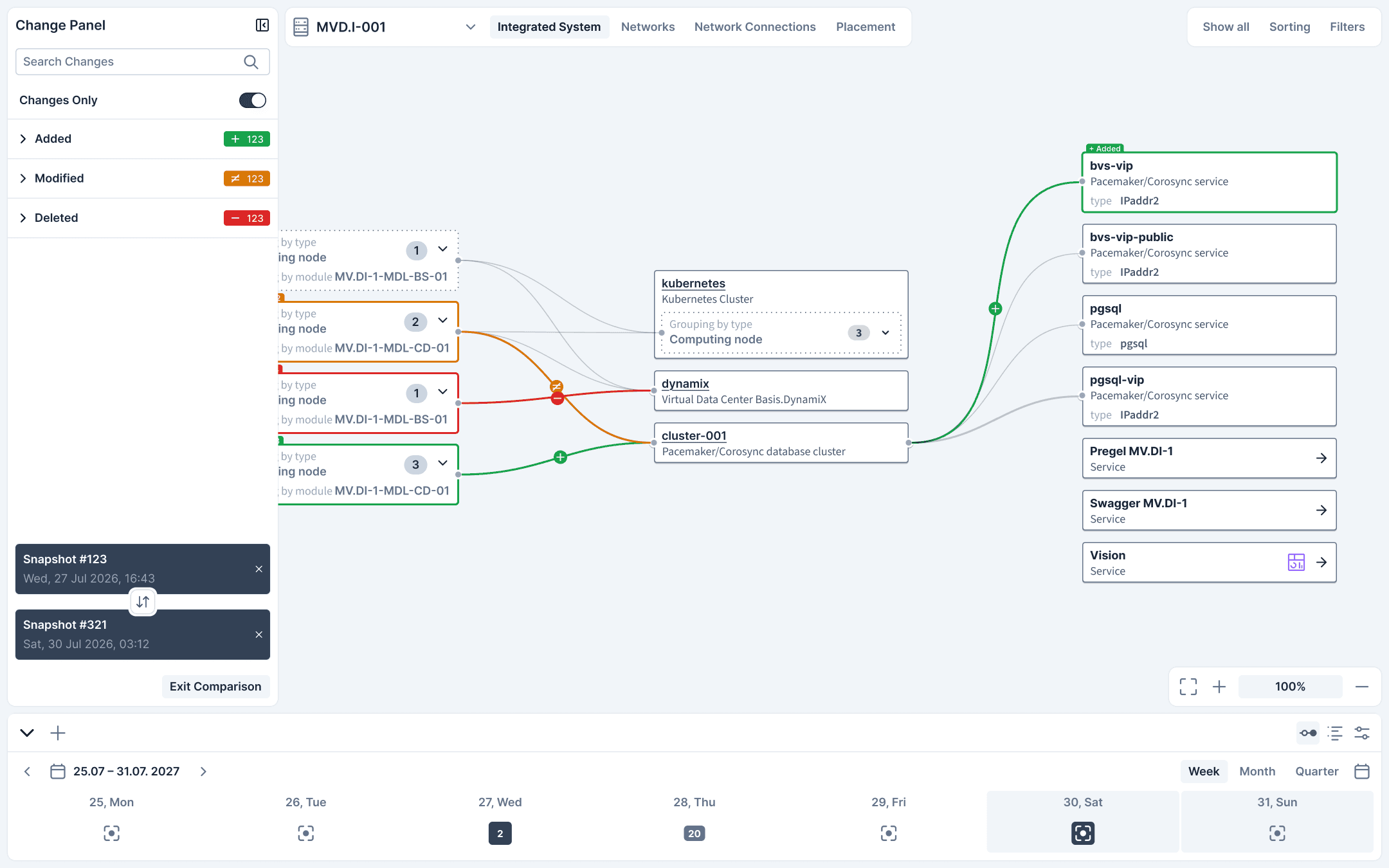
The small decisions
By focusing on iterative improvements, I ultimately drove a full revamp of the model. I engineered a structured, step-by-step framework that checked all the boxes for the systems analytics requirements, while simultaneously unlocking the flexibility to build a context-aware interface for much more effective incident resolution.